Every glaze finds a home.
An interactive Stull diagram enriched with 133 computed properties, seven blend calculators, and room-scale VR on Quest 3.
What is the Stull diagram?
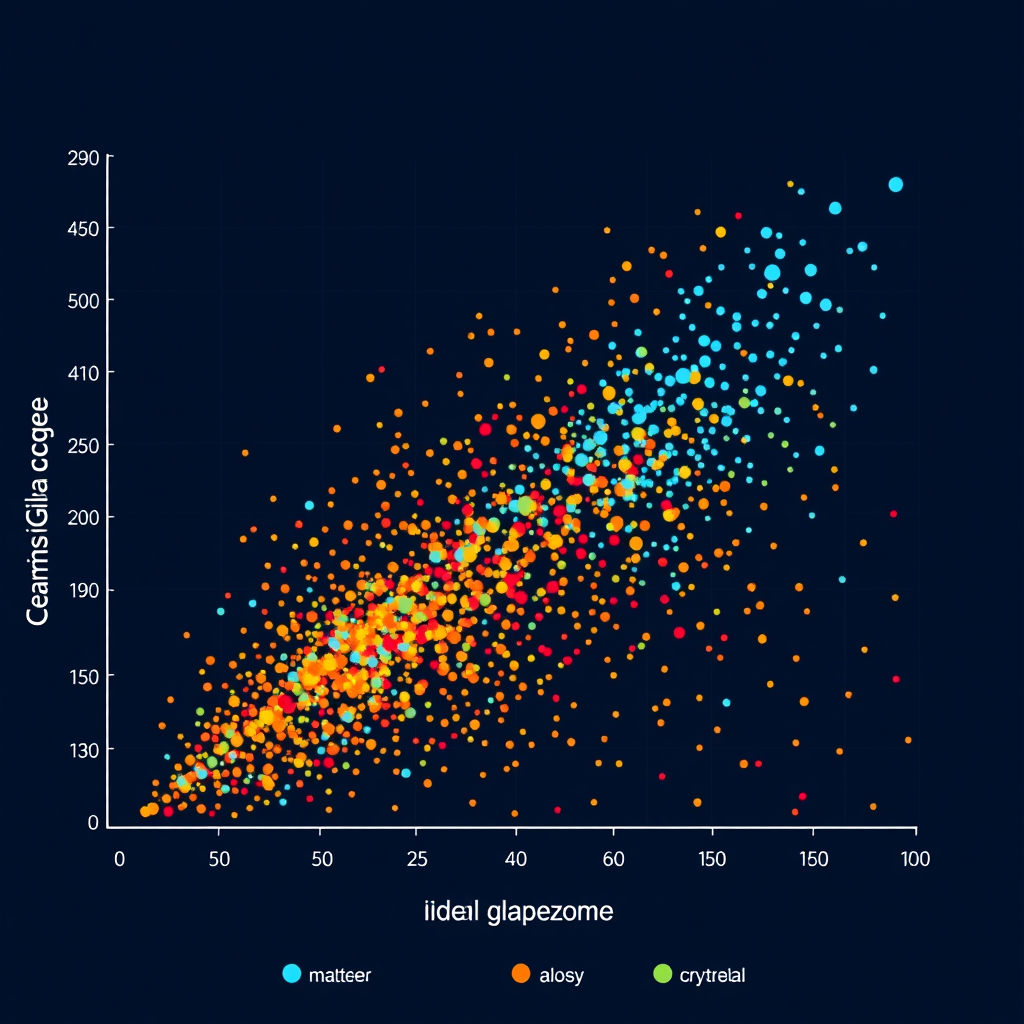
In 1912, Alfred Stull discovered that almost every measurable property of a fired glaze - surface texture, thermal expansion, durability, opacity - can be predicted from just two numbers: the ratio of alumina (Al₂O₃) and silica (SiO₂) in the glaze's Unity Molecular Formula. Plot those two ratios on a chart and every glaze finds a home. Matte glazes cluster in one zone, glossy in another. Celadons, Tenmoku, and crystalline glazes each trace their own territory. Stull Atlas makes that 1912 discovery interactive with real recipes from the community.
🏛️ Primary Sources: 1899–1917
19 volumes of the Transactions of the American Ceramic Society — OCR-indexed and full-text searchable. The foundational research that defined ceramic chemistry, including R.T. Stull's original 1912 paper.
Who is this for?
🏺 Studio Potters
- Find glazes chemically similar to ones you already use
- Predict surface texture and color before mixing a batch
- Design test grids with seven blend calculators
- Compare fired color across cone ranges and atmospheres
🔬 Researchers & Educators
- 133 computed properties - thermal, optical, durability
- Export any recipe set for further analysis
- Visualize oxide relationships across 12,000+ recipes
- Give students a visual entry point into Stull chemistry
🎓 Students & Beginners
- Visual - no formulas to memorize to get started
- Free, no account, works on any device
- See how iron, copper, and cobalt shape glaze color
- Understand why matte and glossy glazes behave differently
a poem about opening the kiln